I feel like we live in this crazy world, which seems to be filled with self-inflating narcissists or, on the other end of the scale, those severely lacking self-confidence.
If you’re still battling with imposter syndrome, let’s see if today’s piece can help.
I work with founders and senior peeps to help their brands become more visible. And yet it’s incredible to me, just how many have imposter syndrome, or despite running successful businesses and projects, still question their worth.
And it can start to have a detrimental impact, or simply take alot of internal energy when it doesn’t need to.
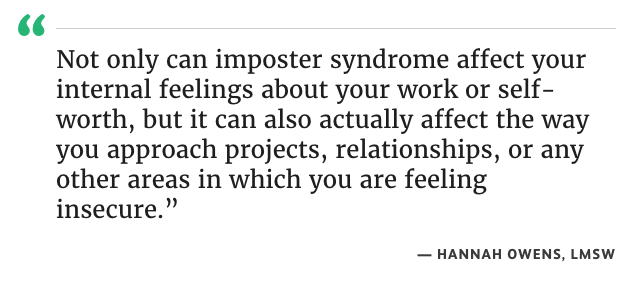
Recently, I’ve been a little tired of my own imposter syndrome, so I sat down and had a little chat with myself to resolve it.
Here’s what I found and hopefully it’ll be helpful to you.
First of all, what is imposter syndrome?
It’s that feeling of doubting that you know what you’re doing.
- Or it’s a doubt of your capabilities.
- Or it’s seeing one’s successes as due to external influences rather than one’s own abilities.
- Or it’s simply feeling inadequate most of the time.
Where does imposter syndrome come from?
Trust me, this isn’t just in your head. It’s a thing.
Imposter feelings often begin in childhood. For example, If praise was based on achievement rather than effort, you might internalize the belief that being valued depends on performance.
Certain traits can also make people more susceptible, like those with
- Perfectionism: Believing that anything short of flawless means failure.
- High conscientiousness: Overvaluing hard work while discounting innate ability.
- Anxiety or neuroticism: Being more sensitive to perceived failures or judgment. (Haha, I think this has my name next to it in the dictionary.)
It can also arise in highly competitive environments, especially when success feels scarce. Many workplaces and institutions reward overwork and self-criticism, or fail to create environments where diverse contributions are genuinely valued — conditions that breed imposter feelings.
Feeling like a fraud can also be triggered by circumstance
Imposter fear is often triggered by circumstance in one of two ways;
- You’re put in a situation where you’re on display, like in public speaking, or you have to demonstrate your ability in some way that makes you feel vulnerable.
- You find yourself in a situation where someone or a group of people doubt your ability, or where you THINK they doubt your ability, for example, like being passed over for a promotion.
So how do you overcome imposter syndrome and fear?
Acknowledging the fear will help shut off the alarm
This isn’t the time to sabotage yourself and tell yourself you’re not ready. It ALSO isn’t the time to put additional pressure on yourself.
Sometimes you have to feel the fear and do it anyway. But that doesn’t mean ignoring the fear. The more you acknowledge your fears with kindness, the less they will take hold of you. Trust me.
Find a phrase
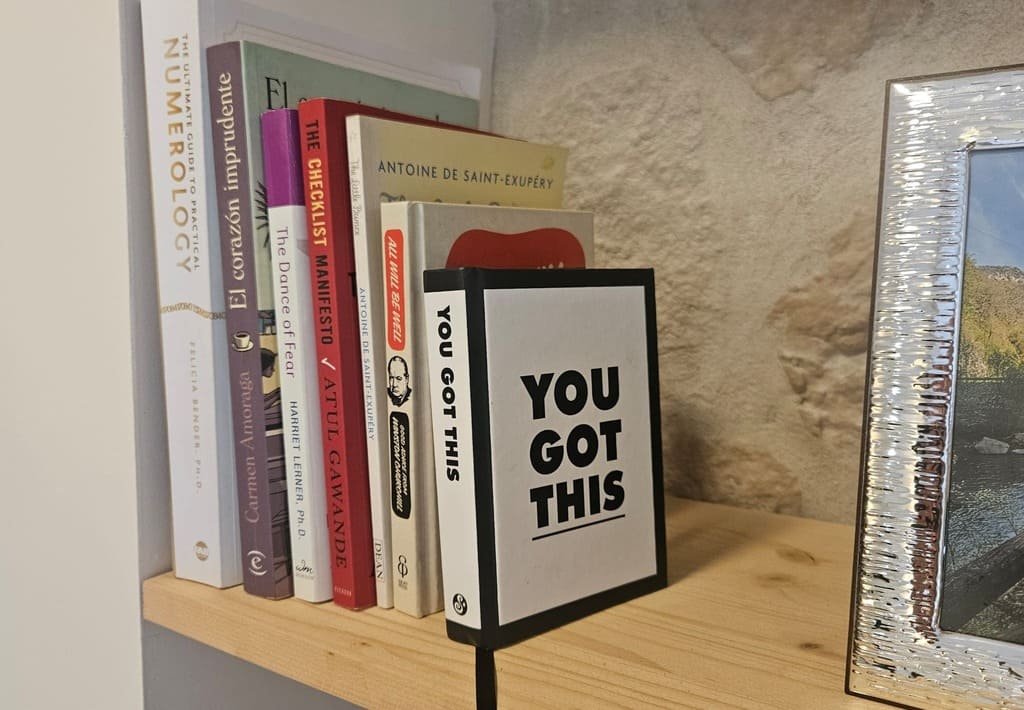
Finding a phrase and sticking it up on my fridge helps me a lot. YOU’VE GOT THIS. In fact, it’s also on my bookshelf from a gift a friend gave me.
Visualize
Can you close your eyes, breathe, and imagine yourself in a moment of victory? I try this on my motorbike and it works like a charm. Doesn’t mean I’m ready to ride MotoGP, but it does mean I can at least take myself out with my friends for a day on the bike.
Find a physical prop
My prop and my phrase are one, but I also sometimes wear a specific bracelet when I need a little bit of courage. It works a treat! Try something like your favorite shirt
Rally the troops
If you are lucky enough to have incredible people in your life who unconditionally support you and have your back, treat them well and keep them close. They will be your lifesavers and you theirs.
Lastly, remember this: you are not what you do.
So your worth as a human cannot be tied to achievement. This is tough to remember, but it’s the truth.
Also, remember to be SUPER compassionate with yourself. It’s not about pity, it’s about compassion, and it works a treat.
When is it NOT imposter syndrome?
Like most things in the world, it’s a complex subject and not black or white. Sometimes you may feel like a fraud because you’ve failed at something and need to up your skill level.
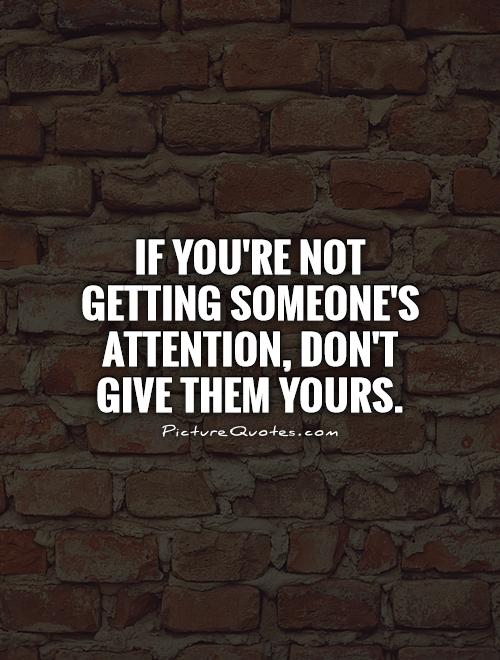
It’s NOT imposter syndrome if you’re trying to get sympathy or attention from others, or if you simply need to improve your skills.
It can be hard to acknowledge that you need to improve—trust me, I know. But focus on the failing forward, or failure as part of the path to success, and you’ll be just fine.
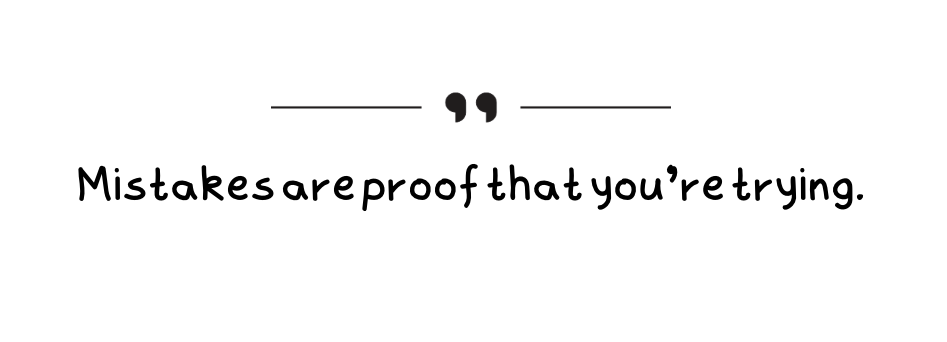
Mistakes are proof you’re trying.
The Bottom Line?
Act and know that what you achieve or don’t doesn’t have any correlation with who you are as a person I.e. your self worth.
One of my mentors once told me, Lisa you may as well stop worrying so much about the outcome and just be curious and put yourself out there anyway.
At the end of the day, life has a way of working itself out.
I found it greatly comforting, like maybe you don’t have to worry so much about trying or not trying to be anything.